
A pothole almost never shows up overnight. It starts as a hairline crack, water works its way in, and the freeze-thaw cycle does the rest. By the time it’s a hole big enough to rattle a customer’s car, the failure has been building for a season or two. The good news: once you understand how a pothole actually forms, fixing it (and preventing the next one) gets a lot simpler.
Here’s how parking lot potholes happen, how to repair them the right way, and how to know when a patch will hold versus when you’re looking at a bigger problem.
Why parking lot potholes form
Every pothole is a water problem first. A crack lets water seep beneath the surface and into the base. On Long Island, our winters run that water through repeated freeze-thaw cycles. It freezes, expands, and pushes the pavement apart, then thaws and leaves a void underneath. Add the weight of daily traffic and road salt, and the weakened spot eventually caves in. That’s a pothole.
This is why potholes cluster where they do: entrances, drive lanes, and low spots where water collects. If water can’t drain off your lot quickly, it’s working on your asphalt every day it sits there.
Temporary vs. permanent: the two ways to fix a pothole
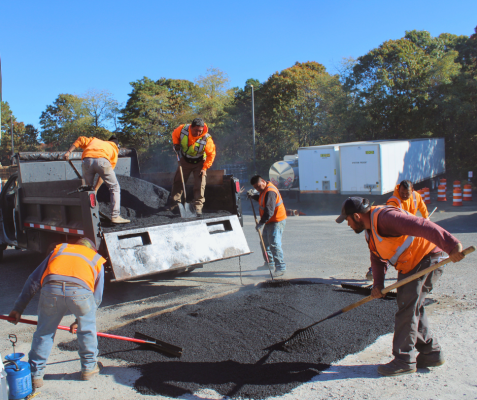 Not every repair is the same, and the right one depends on the season and how long you need it to last.
Cold patch (the temporary fix). Cold-mix asphalt comes ready to use and can be shoveled into a pothole in any weather, including cold and wet. It’s the right call for an emergency, a hazard that needs to be safe today, in January, when hot mix isn’t an option. The trade-off: it’s a band-aid. Cold patch typically holds for a season or so before it needs a permanent repair.
Hot-mix repair (the permanent fix). Hot-mix asphalt, installed and compacted properly, is the repair that actually lasts. It needs warm, dry conditions to bond and cure, which on Long Island means roughly spring through early fall. Done right, a hot-mix patch becomes part of the lot.
How to fix a parking lot pothole, step by step
This is the proper hot-mix method, the one that holds instead of washing out by next spring.
- Assess the damage. Is it just the surface, or has the base failed underneath? A spongy edge or cracking spreading out around the hole is a sign the base is involved, which changes the repair.
- Square-cut the area. Saw-cut the pothole back to solid, sound pavement, leaving clean straight edges. Skipping this is the number-one reason patches fail. You can’t bond new asphalt to crumbling edges.
- Clean it out and dry it. Remove all debris, loose material, and standing water. A patch placed over wet or dirty base is already failing.
- Apply a tack coat. Coat the edges and bottom with asphalt tack so the new material bonds to the old instead of sitting loose in the hole.
- Fill with hot mix in lifts. Add the asphalt in layers (“lifts”) rather than one deep dump. Deep single fills don’t compact evenly.
- Compact each lift to grade. Use a roller or plate compactor to pack every layer tight, finishing flush with the surrounding surface. Compaction is where most DIY and quick-fix patches fail, because loose asphalt unravels under traffic fast.
- Seal the seams. Seal the edges where the patch meets the existing lot. Unsealed seams are an open door for water, and water is what started the whole problem.
When to DIY, and when to call a pro
For a single, small pothole in a driveway or low-traffic spot, a bag of cold patch and a tamper will get you through. That’s a reasonable weekend fix.
A commercial parking lot is a different situation, and it’s usually worth a professional repair when you see any of these:
- Recurring potholes in the same area. That’s base failure, and a surface patch over a failed base just fails again.
- Alligator cracking (a web of connected cracks) around the hole. Another base-failure signal.
- Multiple or large potholes, or damage in a main drive lane or loading area.
- Liability and ADA concerns. A pothole near an accessible space, walkway, or entrance is a trip-and-fall and a vehicle-damage claim waiting to happen.
On a commercial lot, the pothole you can see is often a symptom of a problem you can’t. A professional repair addresses the base, not just the gap, which is the difference between fixing it once and patching it every spring.
The cheapest fix is the one you make before the pothole
Once you’ve had one pothole, the smartest move is preventing the next. Potholes are the expensive end of a cheap problem, and the maintenance that stops them costs a fraction of the repair:
- Crack filling seals the openings before water can get into the base.
- Sealcoating on a regular cycle protects the surface from water, UV, and salt.
- Fixing drainage so water leaves the lot instead of sitting on it.
- Catching small cracks early, before a freeze-thaw winter turns them into holes.
Small failures can be scheduled. Emergencies can’t. A little planned maintenance is what keeps a lot off the emergency list.
Need commercial pothole repair on Long Island?
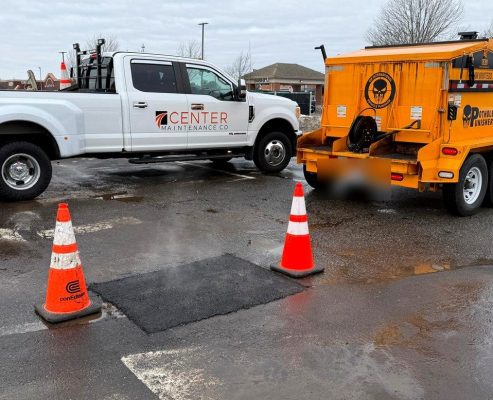 Center Maintenance Company has handled commercial asphalt repair for parking lots across Long Island since 1994, with saw-cut hot-mix repairs that fix the cause, not just the hole. If your lot has potholes spreading or coming back, we’ll assess what’s actually happening underneath and tell you what it needs.
Request a free estimate or call (516) 735-2200
Frequently Asked Questions about Pothole Repairs
Water, almost every time. A crack lets water seep under the surface into the base, and Long Island’s freeze-thaw winters make it expand and contract until the weakened spot caves in under traffic. That is why potholes cluster at entrances, drive lanes, and low spots where water collects.
Temporarily, yes. Cold-patch asphalt can be placed in any weather and is the right call for a hazard that needs to be safe today. It typically holds for about a season, so it should be followed by a permanent hot-mix repair once warm, dry weather returns.
Cold patch is a ready-to-use temporary fill that buys time. Hot-mix asphalt, saw-cut to clean edges, placed in layers, and compacted to grade, is the permanent repair that becomes part of the lot. The permanent method needs warm, dry conditions, roughly spring through early fall on Long Island.
Because the base underneath has failed, not just the surface. A patch over a failed base fails again. Recurring potholes and alligator cracking (a web of connected cracks) are the signs the repair needs to address the base, not just fill the hole.
Keep water out of the pavement. Crack filling seals openings before water reaches the base, sealcoating on a regular cycle protects the surface, working drainage keeps water from sitting on the lot, and catching small cracks early stops the freeze-thaw cycle from turning them into holes.
On a commercial lot: when potholes recur in the same area, when alligator cracking surrounds the hole, when damage sits in a main drive lane or loading area, or when a pothole is near an accessible space, walkway, or entrance, where it becomes a trip-and-fall and liability risk. Those signs mean the problem is under the surface.