
By Kim Van Gorder | Reviewed by Dave Nava, Owner
Before the first snow, walk your lot with a phone and photograph it the same way every year: wide shots, then closer, every curb, island, drain, crack, pothole, and line. File the photos by date. When a plow scrapes a curb, a tenant reports a pothole, or someone slips in February, that record shows what the lot looked like before winter, and when someone last looked. In New York, that second part matters.
That is the short answer. Below is why the record matters, how to shoot it so it actually holds up, a checklist of what to photograph, and what to do once the walk is done.
Why a dated photo record is worth one walk
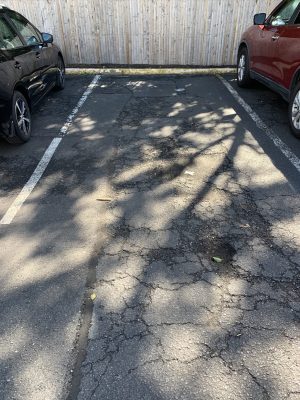 It settles plow damage before it becomes an argument. The industry’s procurement standard for snow services says a contract should define who pays for “damages that were not identified in preseason photos and/or documented during a preseason walkthrough” (SIMA-10-2025). It also makes the preseason inspection the responsibility of all contracted parties. Without photos, every scraped curb and gouged island in March is your word against the plow driver’s.
It turns the spring repair list into a comparison, not a guess. Side-by-side photos from October and March show exactly what winter did, which cracks opened, and which patches held.
It shows when someone last looked. This is general information, not legal advice. Under New York’s long-standing rule, an owner is charged with constructive notice of a defect that is “visible and apparent” and existed long enough before an accident “to permit defendant’s employees to discover and remedy it” (Gordon v American Museum of Natural History). Courts covering Long Island have said owners must offer “some evidence as to when the area in question was last cleaned or inspected,” and that “mere reference to general cleaning practices” is not enough (Sesina v Joy Lea Realty). In a Suffolk school district case, custodians had inspected a cracked area of a parking lot the morning of a black ice fall, but the record could not show what they actually observed, and the case went forward (Steffens v Sachem Central School District).
Insurers say the same thing in plainer words. One major carrier’s guidance: “Keep a log of all inspections, names of those conducting the inspection, and what action was taken… Maintain logs for at least three years” (Allianz).
One honest warning. A photo of a pothole you never fixed works against you, not for you. The record is only worth having if the walk ends in a fix list and the fixes get done. That is the real point of the exercise: find it in October, fix it before it freezes.
How to shoot it so it holds up
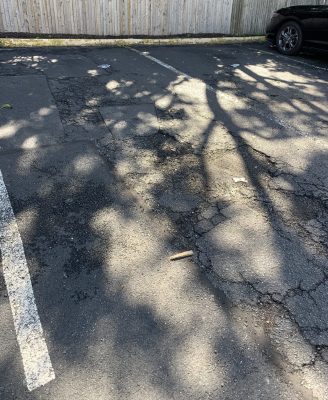
- Check the date and time on your phone first. Every photo should carry the right timestamp, and location services should be on so the photos carry where they were taken.
- Go wide, then middle, then close. A wide shot shows where you are on the lot, a middle shot shows the feature in context, and the close-up shows the detail. Forensic photography guidance uses the same sequence, because a close-up with no context proves very little (NIST / OSAC).
- Put something in the frame for scale. A tape measure, a pen, or a shoe next to a crack or pothole tells anyone later how big it was.
- Stand in the same spots every year. Pick a few fixed points (each entrance, each corner, the main drive lane) and shoot from them every fall. Year-over-year photos from the same spot show change at a glance.
- File it the same day. One folder named with the property and date, for example “Property Name Pre-Winter 2026-10-20.” Add a one-page note: who walked, when, and what you found.
The checklist: what to photograph
- Each entrance and exit, wide, from the street side and the lot side
- Main drive lanes and truck routes, end to end
- Every curb, island, and median, especially corners where plows turn
- Catch basins and drains, including any that sit high or low or are clogged
- Manhole covers and utility boxes in the paved area
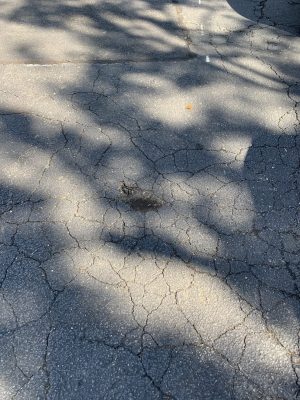
- Every crack wider than a pencil, and every crack pattern that looks like a web of small blocks
- Potholes and patches, with something in the frame for scale
- Speed bumps, wheel stops, and car stops, since plows catch all three
- Light pole bases, bollards, and signs near the pavement
- Accessible parking spaces, access aisles, ramps, and their signs
- Fire lanes and hydrants
- Faded striping, arrows, and crosswalks
- Sidewalks and building entrances, where most slip and fall claims start
- Low spots that hold water (shoot them after a rain if you can)
- The places snow will be piled, and where meltwater from those piles would run
- Dumpster pads and loading areas, where heavy trucks break pavement first
After the walk
- Make the fix list. Sort what you found into what must be fixed before snow (trip hazards, open potholes, raised structures, open cracks) and what can wait for spring. Crack filling can usually still be done in fall after sealcoat season ends, as long as the pavement is dry and above about 40 degrees. See crack filling before winter.
- Stake the hazards. Industry staking guidance is to mark catch basins, drainage areas, manholes, hydrants, utility boxes, gas meters, pavement edges, medians, and parking islands in mid-fall (SIMA). Insurers also recommend painting curbs, islands, and wheel stops in contrasting colors so people can see them in bad weather (AmTrust).
- Share the photos with your snow contractor, in writing. Ideally walk the lot together. Agree that the photos are the baseline for any damage claim.
- Keep the record with your winter logs. Insurer snow and ice logs include a place for time-stamped photos (CNA). Ask your own insurer how long to keep them.
- Walk it again when the season ends. The SIMA standard calls for a joint inspection within 30 days after the season. Same spots, same angles. That second set becomes your spring repair list.
Or let us walk it with you
CMC’s free site walk is a professional version of this record. An operator walks your lot on foot, photographs what we find, and goes over it with you: what to fix now, what to plan this season, and what to leave alone. It is free whether you hire us or not.
It does not replace your own logs during the season. It gives you the baseline to start them from. Request a free site walk or call 516-735-2200.
Commercial parking lot maintenance and site walks on Long Island | CMConsite.com | 516-735-2200
FAQ
Entrances, drive lanes, curbs, islands, drains, manholes, cracks, potholes, patches, speed bumps, wheel stops, pole bases, accessible spaces, fire lanes, striping, walks and entrances, low spots, and the areas where snow will be piled. Photograph each one wide and then close, with something for scale.
In mid-fall, before the first snow and before stakes go in, so there is still time to fix what you find. Hot-mix patching depends on the asphalt plants, which on Long Island generally close for the season around mid-December.
Not by themselves. A dated record shows what was there and when someone last looked, but a photo of a hazard you never fixed can work against you. The walk only helps if the fixes get done. Ask your attorney and insurer about your situation.
Yes. The industry’s procurement standard ties damage responsibility to what was documented in preseason photos or a preseason walkthrough. Agree in writing that the photos are the baseline.
Ask your insurer. One major carrier recommends keeping inspection logs for at least three years.
Your own photo walk is a record. A CMC site walk adds a professional read: what each problem area will do if ignored, the fix, and when to do it.